Container Orchestration with Kubernetes
⏱
6 mins remaining
How Kubernetes Works
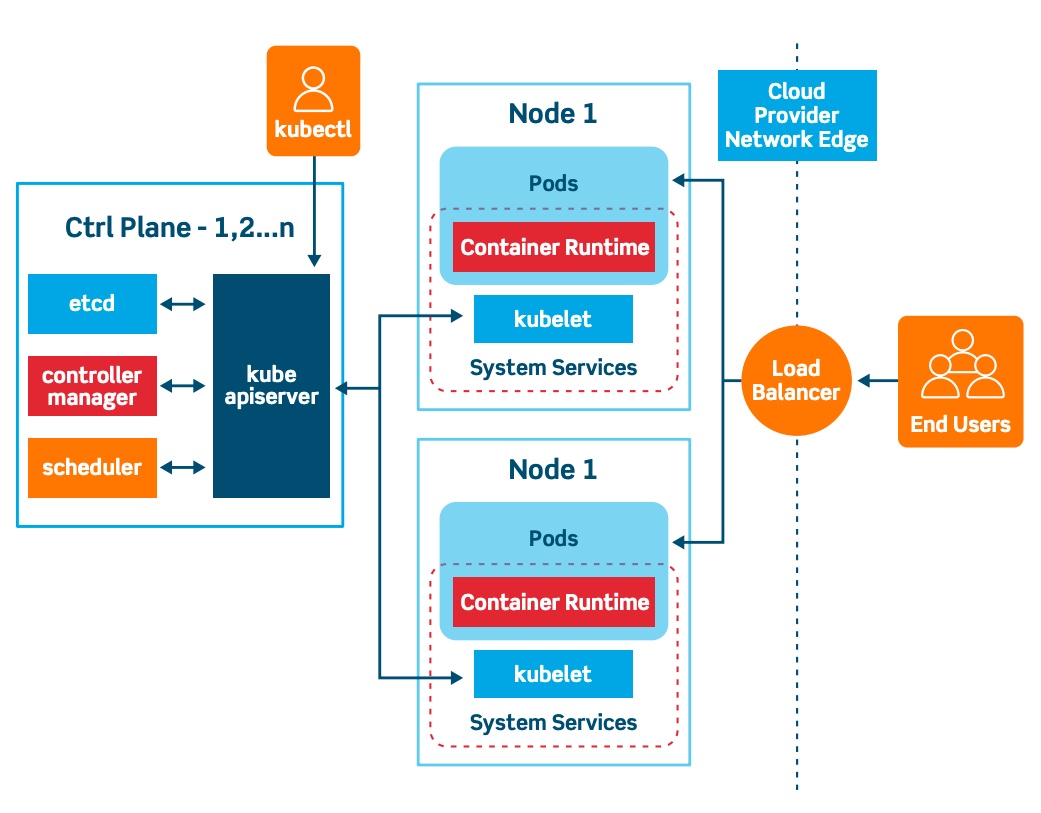
A Kubernetes cluster architecture comprises a set of interconnected components that work together to facilitate the deployment, management, and scaling of containerized applications. The key components include:
Master Node:
- API Server: Serves as the entry point for the Kubernetes API, handling requests and managing communication with other components.
- Controller Manager: Maintains the overall cluster state by monitoring and controlling controller loops that regulate different aspects of the system.
- Scheduler: Assigns workloads to available worker nodes based on resource requirements and constraints.
- Cloud Controller Manager (Optional):Interfaces with cloud-specific APIs to manage resources on cloud providers, enabling seamless integration with cloud services.
Worker Nodes (Minions):
- Kubelet: Ensures that containers are running on each node, communicating with the API server and managing container lifecycles.
- Kube Proxy: Maintains network rules on nodes, enabling communication between Pods and external network entities.
- Container Runtime: The software responsible for running containers, such as Docker or containerd.
etcd:A distributed key-value store that stores the cluster’s configuration data and the current state, ensuring consistency across the entire cluster.
Add-ons: Additional components like DNS servers, dashboards, and monitoring tools that enhance the cluster’s functionality and ease of use.